Donors Forum

New Insights on a Critical Partner in Affordable Housing

Share this post:

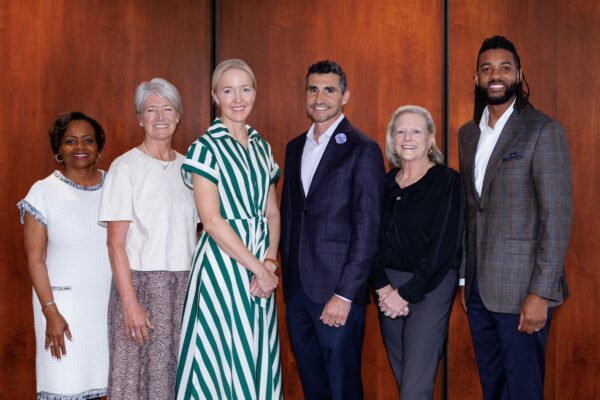
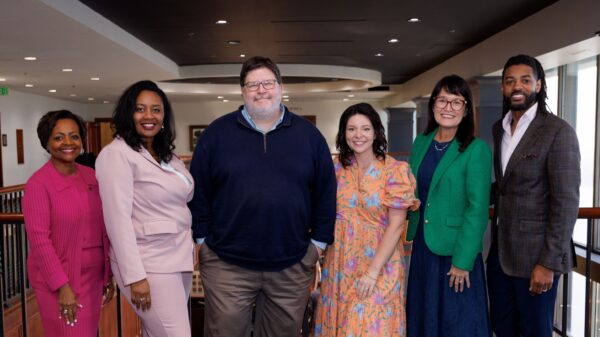
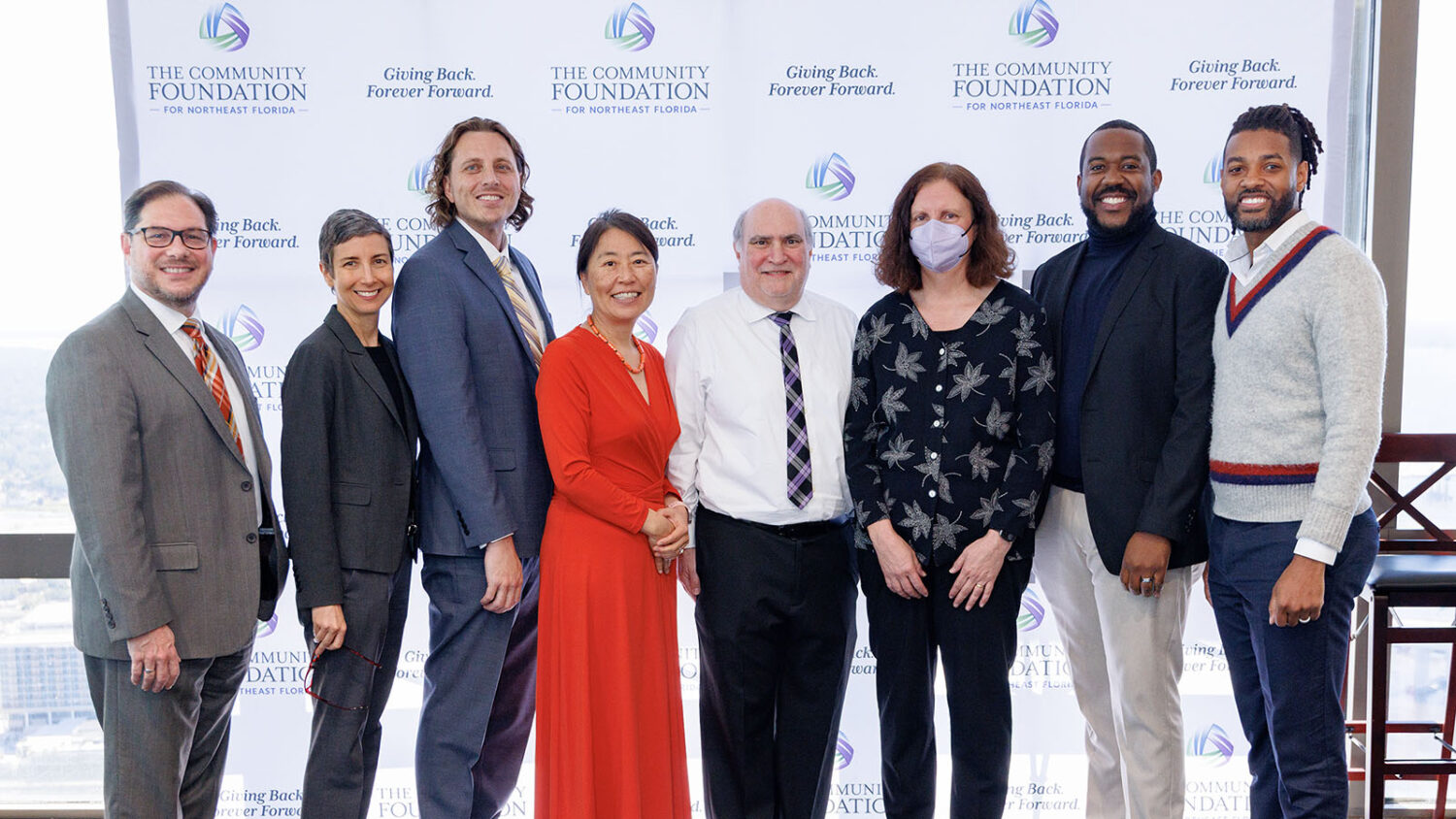
On October 31, 2025, The Community Foundation for Northeast Florida hosted a Donors Forum at the River Club to discuss New Insights on a Critical Partner in Affordable Housing. The forum was opened by the Foundation’s Vice President for Civic Leadership, Wanda Willis.

Judge Brian J. Davis, a trustee of the Foundation, provided a brief introduction of the history of housing and community development in the United States and in Jacksonville.

  • The Economic Opportunity Act of 1964 (amended in 1969), established the first CDCs, and Congress funded a series of low-income (LI) programs until a shift occurred toward public/private partnerships.
  • The Local Initiatives Support Corporation (LISC) was created in the mid-1990s, and around the same time, the Foundation began its support of neighborhoods with the Building Our Community initiative. The Foundation joined with partners to help establish LISC Jacksonville in 1998.
  • Judge Davis concluded by describing how the Foundation has expanded its work in impact investing through a number of investments from the Local Capital Pool and efforts to launch the Jacksonville Affordable Housing Fund.

Guest Speakers:

  • Stan Fitterman is a housing and community development consultant who formerly was Managing Director of Property Development for Ability Housing, a Florida-based nonprofit developer of affordable rental housing, and a Senior Consultant with Capital Access, where he provided assistance to Community Development Block Grant–Disaster Recovery grantees in NC, SC, and FL. Fitterman was recently commissioned by the Foundation, the Jessie Ball duPont Fund, and the United Way of Northeast Florida to produce a research report about Jacksonville’s CDC ecosystem, “Community Development in Jacksonville, Florida: Opportunities to Maximize Investments.”
  • Anne Ray is the manager of the Florida Housing Data Clearinghouse at University of Florida’s Shimberg Center for Housing Studies. She directs the statewide Rental Market Study and has performed research in numerous areas of need-based housing.

Key Points from Anne Ray on Jacksonville Neighborhood Housing Trends

  • Housing prices in Jacksonville spiked in 2020, and while they have leveled off, they have still outpaced growth in wages and remain at high levels.
  • Several focus neighborhoods in Jacksonville – Springfield, Mixon Town, Brentwood, Eastside, Murray Hill, and Mid-Westside — were compared to Duval County as a whole, and then a five-county area (MSA consisting of Duval, Clay, Nassau, Baker, and St. Johns).
  • The median age of homes in the focus areas is considerably older than that of Duval and the MSA as a whole — ranging from 1914 in Springfield to 1940s and 1950s in Murray Hill and the Mid-Westside compared to a median age of 1987 in Duval and 1996 in the MSA. Half the houses in Duval County were built in the 1980s or 1990s.
  • The focus areas have more diversity in housing stock — from single family to small multi-family housing (mostly duplexes) that was built up until the 1980s.
  • The Eastside, Mid-Westside, and Mixon Town areas have a higher share of vacant residential lots.
  • Home ownership rates in the focus areas are lower than the county and region — indicating more rental properties and heirs’ properties.
  • Homes in the focus areas also sell for less than the overall region — except for Springfield, which has more private investment and a large base of housing stock in which much is able to be salvaged — but prices are still up across the board.
  • If Area Median Income (AMI) is considered (using the government metric for affordability), the median wage job for the MSA in this region is 52% of the AMI. In comparison, much affordable housing being built targets those in the 80% AMI range.
Key Points from Stan Fitterman on Community Development in Jacksonville
  • Community Development Corporations (CDCs) are nonprofit entities supporting neighborhoods through affordable housing, economic development, and social services.
  • The purpose of the report was to create a history of each organization, a record of achievements and challenges, provide insight on the evolution of each organization, and compare Jacksonville’s CDC support system to those of other cities. The entire report can be accessed here. Priorities of CDCs in Jax involve addressing the challenges of their neighborhoods, including:
    • Providing services to long-term elderly residents
    • Improving financial literacy
    • Development of single-family housing
    • Improving housing stock while minimizing displacement
    • Development such as grocery stores
    • Society re-entry for the previously incarcerated
  •  Recommendations of what area CDCs need include:
    • A source for ongoing operating support (beyond developer fees)
    • Access to low-cost construction financing
    • An umbrella organization to advocate for CDCs
    • A network for deal-specific technical support
    • Career pipelines and education opportunities to encourage people to work in CDCs
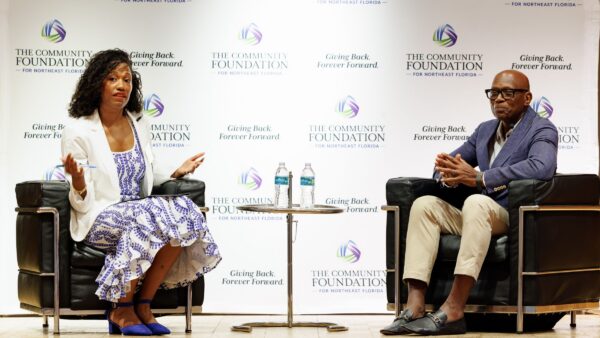
Following the presentations, the speakers participated in a panel discussion moderated by James Coggin, Senior Director of Grantmaking and Impact Investing for the Foundation.
  • CDCs play an important role in developing new housing, but they also focus on preserving existing affordable housing through home repair and heirs property services. The most affordable home is the one people are already in.
  • It is vitally important that people know what their home is worth, and assisting older residents in making relatively small investments in homes (getting up to date on property taxes, insurance, home repairs, etc.) is time and money well spent. LISC has assisted many people with title issues, and the Jacksonville CDCs have preserved $44 million in home values by cleaning up title work.
  • While rental properties are often seen as negative assets for a neighborhood, 98% of all adults have rented at some point in their lives. Rental housing is right for a lot of people, as owning a home can be expensive. Mixed markets, with renters and owners, work well for many neighborhoods.
  • The focus on the “market rate” housing model can be difficult to combat, and it is not realistic to think that CDCs can sustain themselves/survive without philanthropic or public support.
  • There are many opportunities to contribute talent and expertise to CDCs, such as becoming members of the board or contributing expertise for specific projects. That said, CDCs often prefer to hire experts to help because they get services in a more timely manner than relying on volunteers.
  • Funding of CDCs remains a concern, especially since recent federal funding cuts make a significant impact on state and local institutions. More counties are starting to set up their own housing mechanisms to be able to do things they want.
  • Lessons learned from other successful CDCs include:
    • Programs that serve people at different income levels
    • Assist in starting businesses; have entrepreneurial support
    • Take advantage of skill sets in each area and tailor it to needs of specific place
    • In order to achieve homeownership for all, there must be a spectrum of supportive housing, affordable rental housing, and affordable home ownership. All the pieces must work together. There also needs to be evaluation of the different needs of different communities and adjustment as people move in and out and the needs change.

Explore More Donors Forum Topics

Donors Forum

What’s Next for Philanthropy in a Changing Landscape

On August 26, 2025, The Community Foundation for Northeast Florida hosted a Donors Forum at the Cummer Museum to discuss What’s Next for Philanthropy in a Changing Landscape? Foundation President Isaiah Oliver was joined by Joe Scantlebury and Dr. Sherece West-Scantlebury for a fireside chat and Q&A.

Read More »
Donors Forum

The Impact of Collective Giving

On April 17, 2025, The Community Foundation for Northeast Florida hosted a Donors Forum at the River Club to discuss The Impact of Collective Giving. The featured speaker was Michael Layton, Philanthropy Chair at the Dorothy A. Johnson Center for Philanthropy.

Read More »

Sign Up for Our Email Newsletter

Categories

Archive