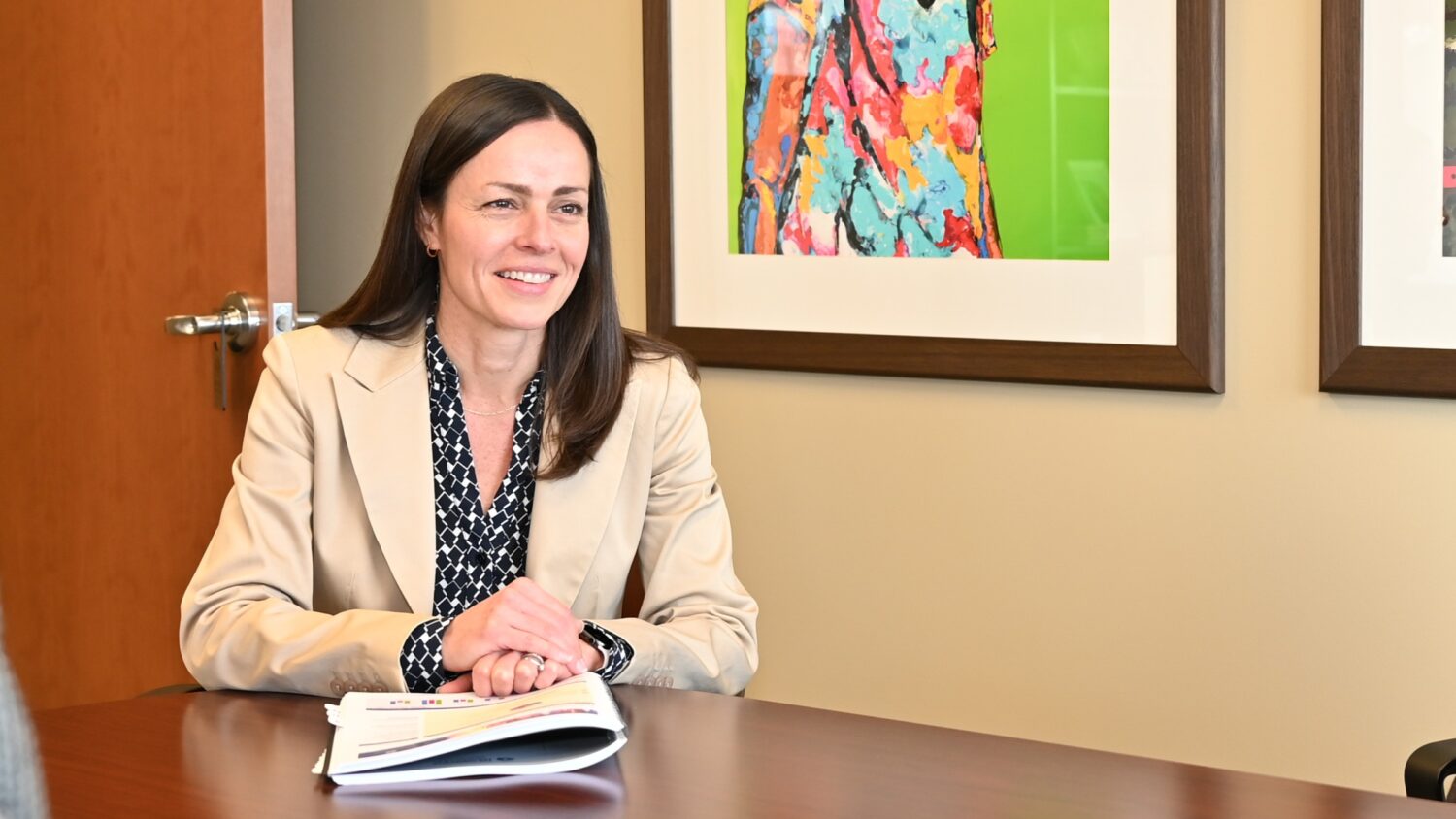
In 2025, Erin Broderick was promoted to VP of Finance at The Community Foundation. She brings significant experience working with advisors to Custom Managed Pools. We sat down with her to learn more about her background and how The Community Foundation invests charitable assets on behalf of donors.
Q. Tell us about your professional background and how you came to The Community Foundation.
A. My educational background is in finance and business. I earned my undergraduate degree from Jacksonville University, majoring in finance and economics, and later completed my MBA at the University of North Florida.
I spent ten years with Wells Fargo on the investment side, managing portfolios that included trust accounts, IRAs, and personal investment portfolios. The portfolios I managed typically ranged from $500,000 to $2.5 million.
After several years in a very large institution, I was ready for a change and to be more connected to the Jacksonville community. That led me to The Community Foundation, where I could broaden my work into finance and accounting and leverage my investment experience.
Fast forward 10+ years, and my role at the Foundation includes serving as a liaison to our investment advisors and cash management across more than 35 investment pools and more than 750 donor funds.
Q. Non-cash gifts can offer significant tax advantages for donors. What are the most common non-cash assets the Foundation accepts? How do you make that process easy for donors and their advisors?
A. The most common non-cash asset we receive is appreciated stock. We maintain several brokerage accounts and process transactions efficiently, monitoring accounts daily and working directly with advisors to ensure transfers are seamless. For donors, gifts of marketable securities often mean avoiding capital gains tax, maximizing the charitable impact of their gifts.
We also accept gifts of closely held business interests. This opportunity often arises ahead of a liquidity event, such as the sale of a business. Many donors have a low-cost basis in their business—contributing a portion of their ownership prior to a sale can provide significant tax benefits. Rather than selling the interest and donating the cash proceeds, donors avoid capital gains tax by contributing the appreciated interest to the Foundation.
Other assets we accept include illiquid alternative investments, real estate, non-publicly traded stock, interests in limited partnerships, and life insurance policies.
Q. You’ve worked closely with advisors on Custom Managed Pools. Can you explain that program and how it benefits donors?
A. Many donors have long-standing, trusted relationships with their investment advisors, and when they make a charitable gift, they often want to preserve that advisor relationship.
For donors with funds of $500,000 or more, we offer an investment program referred to as Custom Managed Pools (CMPs). This program allows a donor to recommend their investment advisor manage the assets held in their fund at the Foundation.
We meet with advisors to CMPs once or twice a year, and because we understand long-term investing, advisors appreciate working with us. It’s a structure that works well for everyone involved—the donor, the advisor, and the nonprofits supported.
Q. You’ve also worked closely on the Local Capital Pool with Grace Sacerdote, EVP/CFO, and James Coggin, Senior Director of Grantmaking and Impact Investing. What makes this investment option unique?
A. The Local Capital Pool is an investment option for donors that allows them to use philanthropic dollars to make low-cost loans to expand affordable housing and economic opportunity in our region. We developed this program after seeing the need for low-cost capital in the community through our key leadership initiative, Supporting Neighborhoods, and we’ve invested or committed more than $7.3 million since it began in 2022. This is a community investment opportunity that donors likely cannot do on their own – and we’re pleased to be able to offer it, leveraging the financial and community expertise of our professional staff and that of our Program Related Investment Committee, which includes John Hirabayashi, who chairs the committee, as well as Michael DuBow, Michael Meyers, John Peyton, Dan Rice, Lauren Rueger, Richard Sisisky, and Dori Walton.