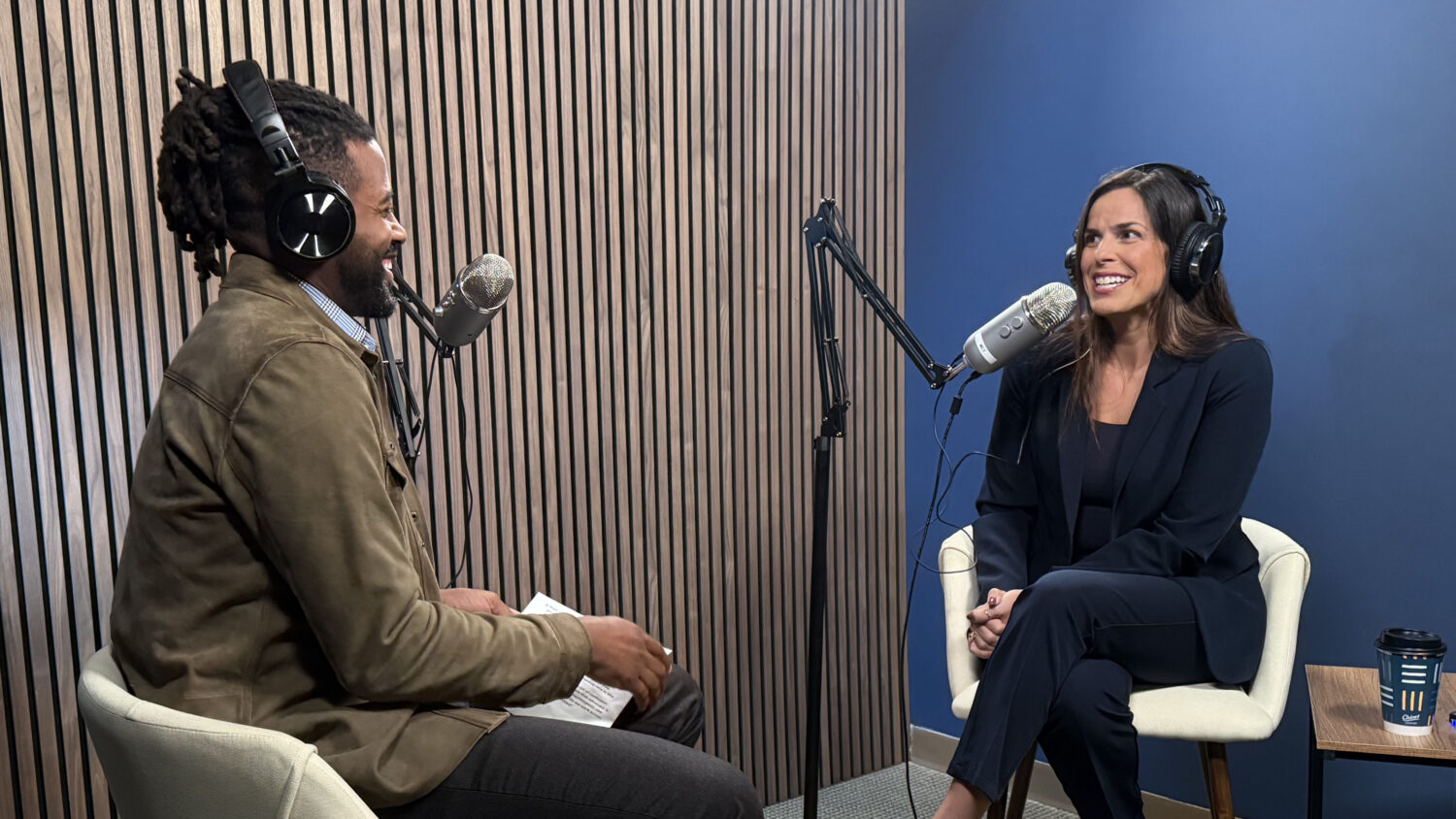
What does it take to build a stronger, more connected philanthropic ecosystem –especially in one of the fastest-growing states in the country? In this episode of Forever Forward, Isaiah M. Oliver, President of The Community Foundation, sits down with Ashley Dietz, President and CEO of the Florida Philanthropic Network, to explore the evolving role of philanthropy in Florida. From collaboration and capacity-building to advocacy, community foundations, and the power of convening in divided times, Ashley shares insights from her unique vantage point at the center of the state’s philanthropic landscape—and why connection, trust, and courage matter now more than ever.
Isaiah Oliver: Welcome back to Forever Forward, a podcast from the Community Foundation for Northeast Florida. I’m Isaiah Oliver, President of the Foundation.
Part of our mission at The Community Foundation is to support the field of philanthropy. We believe philanthropy is a critical part of building a better Northeast Florida—whether through individual donors and families, corporations, or private foundations. All of these funders play an essential role in supporting our nonprofits, which in turn strengthen quality of life in our communities.
That’s why I’m delighted to be joined today by Ashley Dietz, President and CEO of the Florida Philanthropic Network. Ashley is a familiar face here in Northeast Florida, where she represents a number of local funders, including our own Foundation.
I also want to share—because I’m proud of this amazing colleague—that our Chief Financial Officer and Executive Vice President, Grace Sacerdote, serves as Chair of the Florida Philanthropic Network board. Her volunteer leadership is one way our staff shares its expertise and gives back to the broader field of philanthropy.
Ashley, welcome—and thanks for joining us.
Ashley Dietz: Thanks so much for having me, Isaiah.
Isaiah Oliver: I always like to start by learning a bit about our guests. You earned your bachelor’s degree in St. Louis, your master’s degree in Australia, and you’ve now been living and working in Tampa for years. What’s your story, and how did you find your way into philanthropy?
Ashley Dietz: When I first started university, I actually attended the University of Tennessee for two years. After that, my dad was unfortunately diagnosed with cancer, and I transferred back home to St. Louis to be closer to my family.
After graduating, I really wanted to broaden my horizons and do something different. I traveled to Australia just to visit—and ended up meeting my now-husband, Paul. That trip changed everything. I decided to move to Sydney and pursue a master’s degree in public policy, but in all honesty, it was also about being with Paul. Sydney was a love connection in many ways.
At the time, I thought I’d go into public service—maybe work in government, possibly even become a senator one day. I wasn’t exactly sure, but I knew I wanted to serve the community. Everyone else in my family is an attorney, except for me. I knew early on that law wasn’t my path, so I was searching for another way to make an impact.
During my capstone project with the City of Sydney, I took a part-time job in the grants department—just two days a week doing grants administration. I assumed it would be a short-term way to earn some extra income while finishing school. Instead, I stayed in that department for five years.
That’s really how I fell into philanthropy. There weren’t—and still aren’t many—degree programs specifically focused on the field. For me, it was very hands-on learning, and I’m incredibly grateful for that experience. It taught me the meaning of stewardship. We were managing ratepayer dollars—money that wasn’t ours—and we had a responsibility to allocate those funds thoughtfully and equitably across communities. That sense of responsibility has stayed with me ever since, and I’ve worked in philanthropy from that point on.
Isaiah Oliver: We’ll return to philanthropy in a moment, but first I want to talk about your journey to Florida—from one Florida transplant to another. What do you think people get right about Florida? What do they get wrong? And what do you see as our biggest opportunities and challenges?
Ashley Dietz: Everyone has heard the “Florida Man” stereotype—and I can confidently say that narrative isn’t accurate.
Isaiah Oliver: I heard all about the Florida Man before I moved here, and I still haven’t met him.
Ashley Dietz: Exactly. What people often underestimate is just how diverse, enriching, and beautiful Florida really is. We’re the third most populous state in the country, and if you’ve lived here long enough, you know Florida is really five states in one. The culture and values in North Florida are very different from those in South Florida, and that diversity is one of our greatest strengths.
If you live here, you can find just about anything—any kind of community, any way of life. I’ve been a Floridian for more than a decade now, and I’m genuinely proud of that. When people give me a hard time about living here, I push back and say that Florida is home to some of the most collaborative, intelligent, and community-minded people I’ve ever worked with.
Isaiah Oliver: Let’s shift to the Florida Philanthropic Network. For listeners who may not be familiar, can you explain what FPN does and who you represent?
Ashley Dietz: The Florida Philanthropic Network, or FPN, is a statewide association of funders. Our mission is to build philanthropy for a better Florida.
We have about 140 members across the state. Roughly 80 percent of those funders are investing locally or regionally. We also have statewide funders and national foundations that may not be headquartered in Florida but are investing here.
Our membership is diverse. It includes community foundations like yours, corporate social responsibility programs, family foundations, United Ways, and public charities. Together, they form the philanthropic ecosystem in Florida.
I’ve been with FPN for five years now—hard to believe. I started during COVID, so it sometimes feels like fewer years than that. But during this time, our organization has grown by 48 percent. Much of that growth reflects the desire among funders to be better connected—to collaborate, learn from one another, and strengthen the field together. We serve as the connective tissue that helps make those relationships possible.
Isaiah Oliver: From your vantage point, you see many different types of funders. What makes community foundations unique, and what role do they play in building endowed philanthropy in Florida?
Ashley Dietz: There are 26 community foundations that are members of FPN, and one phrase sums it up well: if you’ve met one community foundation, you’ve met one community foundation.
Community foundations are the heartbeat of their communities. They balance being deeply connected to local needs while also serving donors with excellence. They understand what’s happening on the ground, what the greatest challenges are, and how resources can have the highest impact.
At the same time, they build trust with donors—whether through donor-advised funds, competitive grantmaking, or other philanthropic vehicles. That dual role—serving nonprofits and donors—is what makes community foundations so powerful.
Isaiah Oliver: You also see United Ways, family foundations, private foundations, and corporate philanthropy. What makes for the strongest philanthropic ecosystem?
Ashley Dietz: Every community in Florida is different, but I often point to Jacksonville as a strong example of collaboration. Funders here regularly co-fund, share information, and work transparently toward shared goals. Organizations like Florida Blue, the Jaguars Foundation, the Jessie Ball duPont Fund, and many others sit at the table together.
What Jacksonville does especially well is creating space for all types of funders—and often government and the business community—to come together with community at the center. When the focus shifts from individual organizational impact to collective problem-solving, everyone benefits. The more diverse the voices at the table, the stronger the outcomes.
Isaiah Oliver: Capacity-building funding has become especially important since COVID and, more recently, sudden funding losses. Why does it matter?
Ashley Dietz: We’ve talked about capacity building for years, often in connection with sustainability. But the real question isn’t *whether* capacity matters—it’s *how* to support it effectively.
The most impactful approach is unrestricted operating support. Nonprofits function like businesses, and flexibility allows them to respond to challenges, retain talent, and strengthen infrastructure. Transformational gifts like those given by MacKenzie Scott showed us what unrestricted funding can do.
Unrestricted doesn’t mean unaccountable—it means mission-aligned trust. When funders give nonprofits the freedom to do what they do best, capacity grows naturally.
Isaiah Oliver: We’re living in polarized times. What role does philanthropy play right now?
Ashley Dietz: FPN’s members alone represent about $13.1 billion in assets and distribute roughly $1.1 billion in grants annually across Florida. That’s a tremendous responsibility.
In divided times, philanthropy has an obligation to show up—to convene, to listen, and to use its voice. Beyond dollars, philanthropy has influence and credibility. Community foundations, in particular, are well positioned to bring people together and foster dialogue. That leadership is essential right now.
Isaiah Oliver: You’ve said before that advocacy isn’t a dirty word. How can philanthropy engage responsibly?
Ashley Dietz: Advocacy and public policy are one of FPN’s four core pillars. And it’s worth saying clearly: 501(c)(3) organizations are legally allowed to lobby, within limits.
Many foundations don’t realize how much they can do. Public policy advocacy is about advancing mission-aligned goals—whether in education, health, civic engagement, or environmental resilience. We meet funders where they are and help them engage in ways that feel appropriate and effective.
Isaiah Oliver: You work closely with national partners like Philanthropy Southeast and the Council on Foundations. How do those relationships support local philanthropy?
Ashley Dietz: Florida is a challenging policy environment, so strategies that work in places like New York or California won’t always translate directly here. But that doesn’t mean we shy away—we just get strategic.
We’ve also been able to share lessons learned with other Southern and similarly situated states. Those peer relationships are invaluable. They allow us to be brave, thoughtful, and collaborative—even when the work is hard.
Isaiah Oliver: As you look ahead to the next five years, what does success look like?
Ashley Dietz: Success means keeping our members at the center of everything we do. FPN is a 25-year-old organization that began with just seven funders, including the Jessie Ball duPont Fund here in Jacksonville. That history matters.
Growth is important, but relevance matters more. By staying innovative, avoiding mission creep, and maintaining strong feedback loops with our members, we’ll continue to serve the field well.
Isaiah Oliver: Florida is a fast-growing state with enormous economic potential. How do we build a strong philanthropic culture alongside that growth?
Ashley Dietz: There’s a massive transfer of wealth coming over the next 20 to 30 years. Many of those individuals will retire in, move to, or invest in Florida. The question is how we connect them to the philanthropic ecosystem here.
We can learn from states with longer histories of institutional philanthropy—places like New York, California, Michigan, and Ohio—while also embracing the unique opportunity Florida presents. Growth doesn’t have to be intimidating if we’re intentional and collaborative.
Isaiah Oliver: If Florida Philanthropic Network is one of the state’s best-kept secrets, what would you want listeners to know?
Ashley Dietz: Network is in our name for a reason. We’re small but mighty—just three full-time staff members—and our role is to connect funders to one another. Some of my favorite moments are hearing members say, “I met someone at your conference, we had coffee, and now we’re co-funding a project together.” That’s why we exist.
Isaiah Oliver: We’re grateful that you exist. The Community Foundation for Northeast Florida is proud to partner with the Florida Philanthropic Network, and we’re excited about the work ahead. Ashley, thank you so much for joining us.
Ashley Dietz: Thank you for having me.