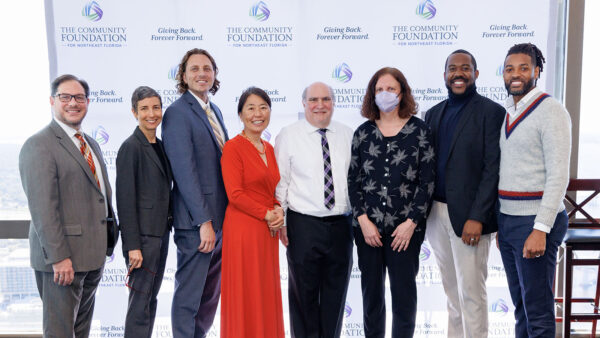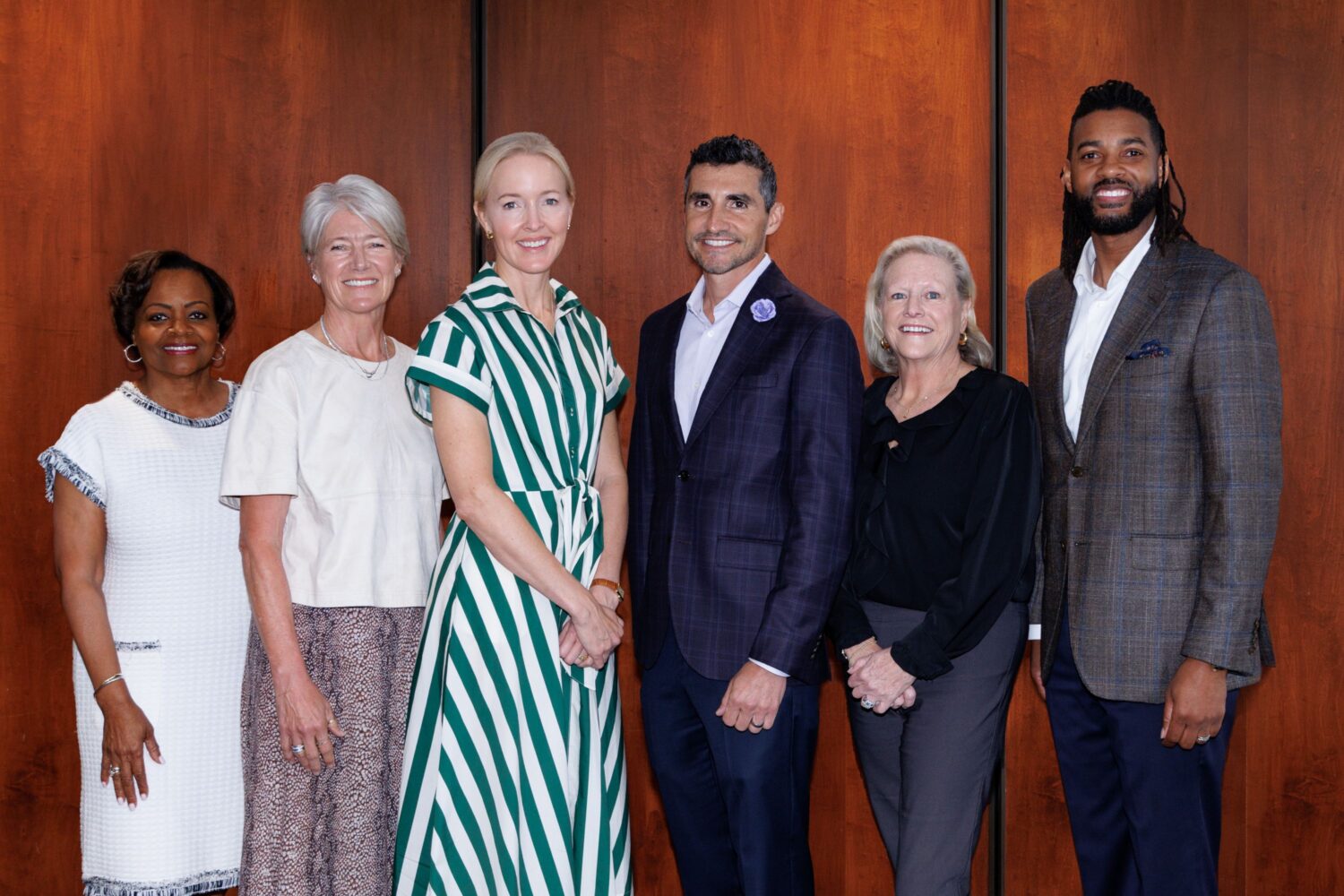
On April 30, 2026, The Community Foundation for Northeast Florida hosted a Donors Forum at the River Club to discuss Food Insecurity in Focus: Policy, Practice, and Philanthropy. The keynote speaker was Robin Safley, CEO of Feeding Florida. As CEO, Robin spearheads the state’s network of food banks, addressing food insecurity across 67 counties. Under her leadership, Feeding Florida has strengthened collaboration across the state, expanded access to critical nutrition programs, and elevated the conversation around hunger as both an immediate need and a long-term policy challenge.
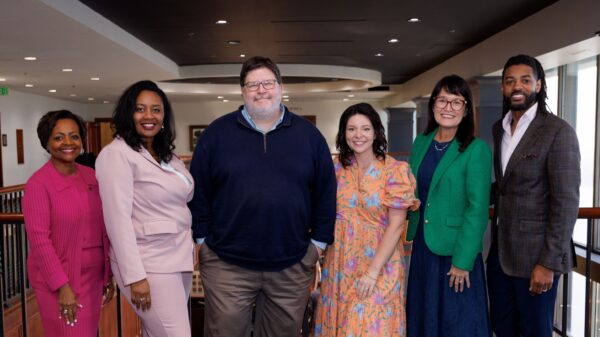
Keynote Speech Highlights from Robin Safley
- Feeding Florida works with a community pantry network of about 2,400 throughout 67 counties. In the last several years, there has been a focus on local distributions (partly due to a need for these during COVID), which includes mobile distributions in places that may not have infrastructure for food security.
- Feeding Florida received $10 million from the legislature last year for enhancing its “last-mile” program, which bridges the gap by delivering food directly to high-need, rural, or food-desert areas.
- There are 3.2 million Floridians who are food insecure. There are also a number of individuals or families who do not quality for SNAP (Supplemental Nutritional Assistance Program), but who may need help during any given month to afford their existence. This can add up to 17.9 million missing meals across the state every week.
- Food insecurity is a symptom of the under-resourced. It affects health, prosperity, and stability. So in order to truly help, we must look at what else needs to go on in that home so they can stabilize and advance. For example, many food banks offer job training, to help individuals get to the first rung of the ladder.
- The USDA has a program called SNAP E&T (Employment and Training), in which participants can get help finding a job, training for a new career, or advance in their current field, while receiving support such as case management, transportation assistance, childcare, books, and supplies. All states receive federal funding to operate this program.
- One current focus is on recovering food that may not be sellable or that is a surplus for the state. Feeding Florida has a program started in 2010 in which it works with growers to pack and bring in produce — fruits and vegetables — that they can’t sell to a grocery store. It also is working to recover milk and protein items like ground beef and has had opportunities to purchase shrimp and clams at cost from aquaculture farmers.
- The future of healthcare and prevention is nutrition, and Feeding Florida is about to launch a pilot with a Medicaid provider that is testing out for the whole state a nutritional intervention strategy that would be a prescription-type model for patients, and which may be reimbursable by Medicaid.
Following the keynote remarks, a panel discussion about food security on the local level was moderated by Lauren Rueger, chair of the Program & Initiatives Committee of The Community Foundation’s Board of Trustees. The discussion included Robin Safley, Katie Ensign, Vice President of Community Impact at Baptist Health, and Josh Martino, past Board Chair of Feeding Northeast Florida and a fundholder at The Community Foundation. Robin shared a statewide perspective on the role of food banks, as well as the policy environment affecting the need for food. Katie discussed the data on food security from the Community Health Needs Assessment. Josh talked about the role of philanthropy in addressing hunger.
Main Takeaways from the Panel Discussion:
Practice — What Are We Seeing?
- The results of food insecurity show up every day in ER departments, primary care, and inpatient settings, and it takes the form of unnecessary and avoidable things like heart disease, difficult-to manage chronic diseases such as type 2 diabetes and hypertension. In children, it impacts cognitive and physical development, mental health, and academic performance.
- There has been an evolution over the last decade in communication and partnerships, in the types of food that are available — fresh produce, lean proteins, low sodium, low sugar — to supply to the community.
- Baptist Health just made a $250,000 strategic investment in Feeding Northeast Florida to help it get more protein and fresh food. It also has a pop-up Farmer’s Market at the Baptist North location.
Policy — Systems & Barriers
- There are definitely challenges in consistent funding; for example, the Big Beautiful Bill took out funding for SNAP nutrition education, and additional work requirements make access a challenge for many people. But it is important to meet people where they are and find pathways and on-ramps to making things happen within the parameters we have been given.
- When people in the Northeast Florida five-county region were asked what are the biggest barriers to health and wellbeing, food insecurity and the lack of access was in the top five. This knowledge of what is actually happening from the people it is affecting enables us to create strategies to address the issues.
- There is a gap between policy intent and lived reality — some policies are well-intended but misplaced, and others are negatively intended. Policymakers would be well served to get more proximate to the need that they’re creating policy for.
Philanthropy — The Role of Donors
- The cost of food continues to rise, and there needs to be more funding for fresh food and proteins — which are typically the more expensive items. We also need to go where the people are. And it’s important to remember that funding good and talented staff is important as well, to have the creativity and talent to enable the work to happen.
- As a country, as a whole, we often don’t have the real face of the need, and we could use more empathy and awareness of what other people experience. Those of us who are in a position to help need to remain intentionally curious, and hopefully this will inspire you to go out into the community and contribute however you are comfortable.
- As far as helping with Feeding Northeast Florida here in our backyard, you can participate however and whatever your skill set will allow. Everyone has skills and expertise, whether it’s policy, community, parts of town that we haven’t reached yet. The wealth of knowledge in the community, your friends, your networks — it is all applicable and valuable. Just be willing!
Donors Forum will return in fall 2026 with more programming for local philanthropists and funders.